5 Quick Tips to Help Strengthen Reading Comprehension
Helping children understand what they read is one of the most important parts of literacy development. Strong reading comprehension skills not only improve academic success but also foster curiosity and a lifelong love of learning. If you’ve ever wondered how to help your child understand stories or make reading fun at home, you’re not alone. Here are five practical strategies you can use right away to help your child become a confident, thoughtful reader.
1. Activate Prior Knowledge

Before reading, take a moment to connect the story to something your child already knows. For example, if you’re reading Charlotte’s Web, look at the cover together and talk about what they notice — the title, the picture, and any familiar ideas. Ask open-ended questions like:
• “What do you know about pigs?”
• “What do you know about webs?”
This simple step helps your child’s brain make connections and prepares them to engage meaningfully with the text.
2. Make Connections
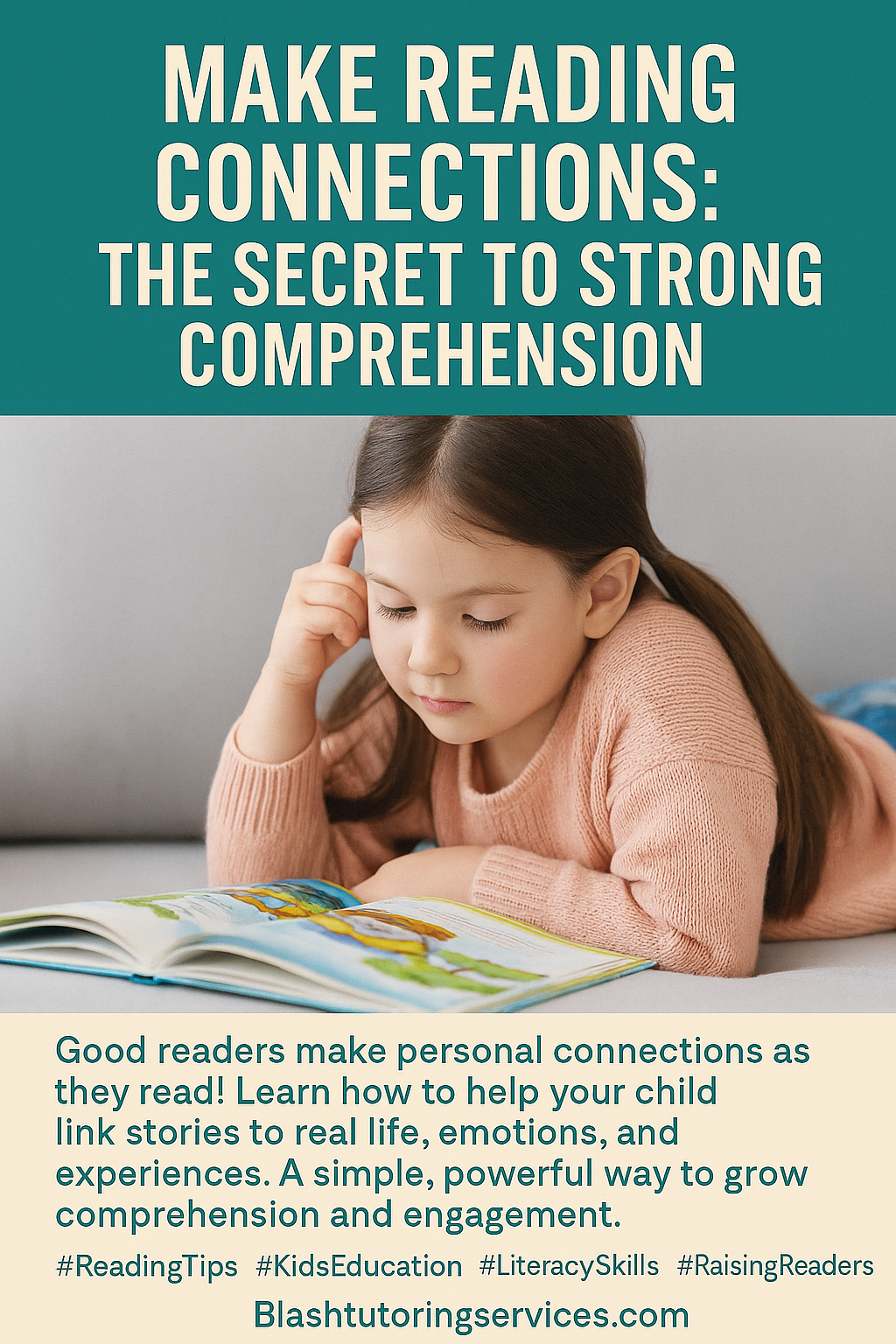
Good readers constantly connect what they read to their own lives. Encourage your child to think about how a story reminds them of a personal experience, someone they know, or even another book they’ve read.
After reading a short section, ask:
• “Does this remind you of anything?”
• “Has something like this ever happened to you or a friend?”
Older children can jot down quick notes about their connections, while younger ones can signal when something feels familiar.
3. Make Predictions

Predictions keep readers curious and focused. Before reading or while turning the page, ask your child to guess what might happen next. Use prompts like:
• “I think that…”
• “I predict that…”
Remind them that predictions don’t need to be right—they just help the reader think deeply about the story. Later, revisit their guesses to see what came true and what didn’t.
4. Ask Questions

Encourage your child to ask questions while they read. Curiosity helps readers stay engaged and look for clues in the text.
They might wonder things like:
• “I wonder why the character did that?”
• “Where did this event happen?”
Sometimes answers come right away, and other times they’re revealed later in the story—or even in another book!
5. Retell the Story

After reading, have your child retell what they just read in their own words. This step helps with memory and comprehension.
At first, their retelling might be brief, but with practice, they’ll be able to include more details and sequence events clearly. Encourage them to focus on the beginning, middle, and end.
Parents often ask a few common questions when working on reading comprehension at home.
Frequently Asked Questions
How can parents help children understand what they read?
Parents can help children understand what they read by talking about the story before, during, and after reading. Asking questions, making connections, and encouraging retelling all support stronger reading comprehension.
What are reading comprehension strategies for kids?
Reading comprehension strategies are techniques children use to understand and remember what they read. Common strategies include activating prior knowledge, making predictions, asking questions, and retelling the story.
At what age should children practice reading comprehension strategies?
Children can begin practicing reading comprehension strategies during read-alouds in preschool. These skills continue developing throughout elementary school as children learn to read independently.
How often should parents practice reading comprehension at home?
Parents can support reading comprehension by practicing a few minutes each day during regular reading time. Consistent, short discussions are more effective than long or infrequent sessions.
What should parents do if a child struggles to retell a story?
If a child struggles to retell a story, parents can guide them using simple prompts such as “What happened first?” or “What happened at the end?” Retelling skills improve with regular practice.
This post is part of our Reading & Language series. For a foundational approach to reading at home, begin with Growing Readers at Home
Continue Exploring